
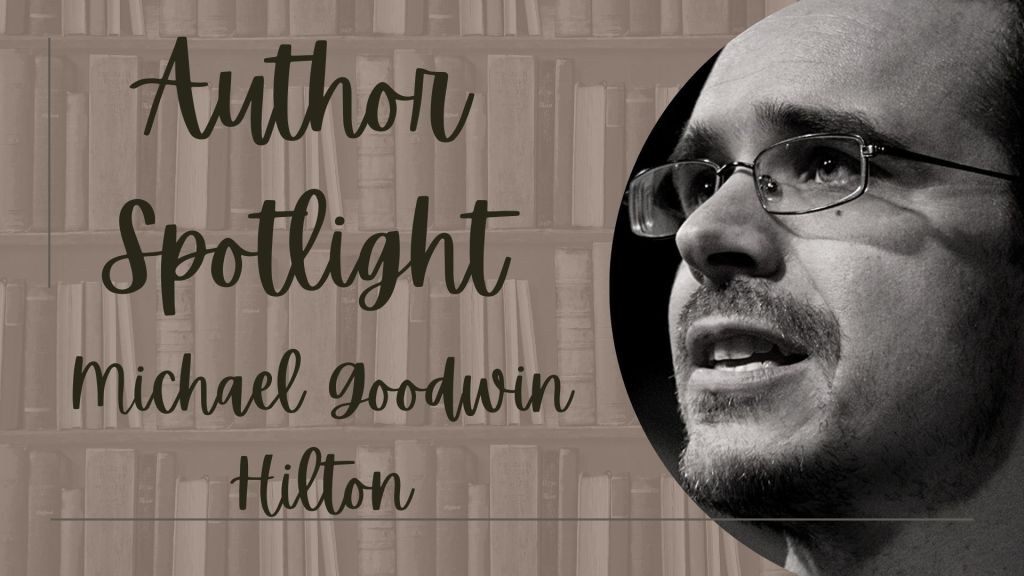
About the Author
Michael Goodwin Hilton is an award-winning playwright, poet, and short story writer who has had his work developed and produced in festivals across the United States and Europe. He is a two-time recipient of the Governor’s Award for Best Play in the State of New Jersey and The Spotlight Award from True Acting Institute, among other honors. His work has been published by Tiny Seed Literary Journal, After Dinner Conversation, as well as in several Smith and Kraus ‘Best Of’ anthologies. His debut short story collection, “What The Statue Thinks“, will be published by Wild Ink Publishing in January 2024. He lives with his family and teaches English and playwriting at the Catholic University of Eichstätt-Ingolstadt in Germany.
What the Statue Thinks

A recovering alcoholic must face his demons in the ‘land of the dead.’ Two actresses become dangerously consumed by an experimental approach to making theatre. A married couple travels to their old vacation spot in search of everything they’ve lost. A neighborhood’s misguided efforts to remove a gaggle of domestic geese lead to the transformation of a young boy. Two lifeguards wrestle over thorny questions of guilt and accountability in the long shadow of 9/11. The owner of a local bike store and a misjudged teenager enter onto a tragic collision course one fateful night. Set principally in the Jersey Shore area, these eleven stories portray people who somehow manage to wrest a strange and singular beauty from the ordeals that define their lives.
What is the Story Behind Your Story?
Some of these stories have been with me for over a decade, going through many different versions and collection drafts. I put them aside a few years ago to focus on my plays, as well as my full-time teaching position. Then, in the early days of the pandemic, while I was dealing with some separate health issues, I began doing some writing exercises from The 3 A.M. Epiphany by Brian Kiteley to try and distract myself. While doing those writing exercises, suddenly the floodgates opened and I knew how I should continue or complete a number of the stories I had worked on years before. So I worked on the manuscript avidly over the next few months, choosing the stories that I thought had the most potential and which seemed to resonate with each other. Within the year I had completed the first working draft.
What Was Your Journey to Publication?
I was extremely lucky. I was on Twitter one day and noticed a comment from Abigail Wild in a thread where she mentioned her new publishing company, and she had written something about measuring success based on “authors’ smiles.” At the time I wasn’t shopping my manuscript around too much because I honestly had very little hope that any publisher would take on a collection of short stories from an emerging writer. But I eventually worked up the courage to send an inquiry to Abigail via Twitter, and one thing led to another, and Wild Ink Publishing can now add another overjoyed writer to its list.
What Surprised You the Most About Publishing?
The editing process never ends. Even close to a year after the book was first accepted for publication, there has still been the need for improvements and adjustments, major and minor. Editing feels at times like a bottomless well, a never-ending project. At some point you have to reconcile yourself to the fact that a manuscript might never reach that place of absolute perfection, but you try to approximate that as best you can. I’ve been extremely fortunate in that I had a terrific editor in Laura Wackwitz at Wild Ink Publishing. She was extremely helpful and thorough throughout the editing process, and I don’t think the book would be half as good as it is without her guidance and support.
What is Your Favorite Writing Tool?
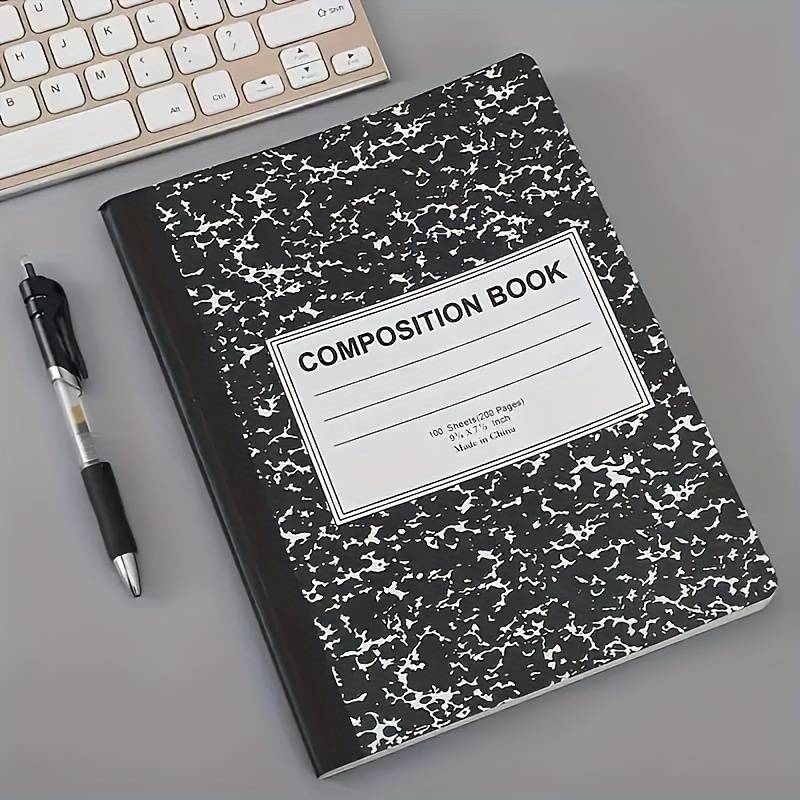
Honestly, my favorite tool is a good old-fashioned marble notebook. I don’t always handwrite first drafts of stories, but I take copious notes related to my writing projects and those notes very often help seal certain story ideas together. Plus, I think it is important for writers to be connected to their work viscerally, i.e. through handwriting, so that the work feels like a physical extension even if you use different programs to help organize the drafts.
What is Your Favorite Writing Resource?
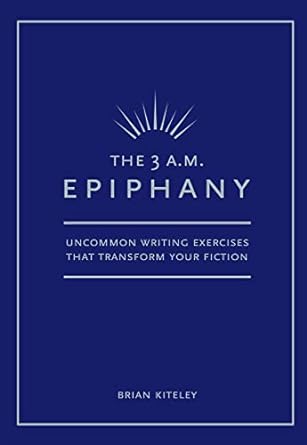
I would absolutely recommend The 3 A. M. Epiphany by Brian Kiteley, a book that was recommended to me during a writing workshop I attended while pursuing my Masters. It contains a number of very unusual but very interesting exercises that get you to think about the process of writing in idiosyncratic and exciting ways. Several exercises from the book directly inspired or helped improve a number of stories in my collection, so I can honestly say that my writing – and writing career – wouldn’t be what it is without that resource.
What’s Next?
My immediate plan for the new year, in addition to trying to generate interest in What The Statue Thinks, is to get to work on a new full-length play about an aging poet and her relationship with her daughter. I hope to have a completed draft by the end of 2024. I also wouldn’t rule out a potential novel within the next years. Mainly, though, I would try to focus on my plays for the foreseeable future.
What’s Your Number One Tip for Writers?
Save all your old notebooks! You might very well discover gems in long-discarded drafts and notes that could develop over time, almost like a pearl, into a crucial part of a story you are working on. This above all, don’t ever give up. The breakthrough is always just around the corner.
Where Can People Find You?
I’m on Twitter/X @AuthorMGH
New Play Exchange Page
I think it is important for writers to be connected to their work viscerally, i.e. through handwriting, so that the work feels like a physical extension.
Michael Goodwin Hilton
 Amy Nielsen
Leave a comment