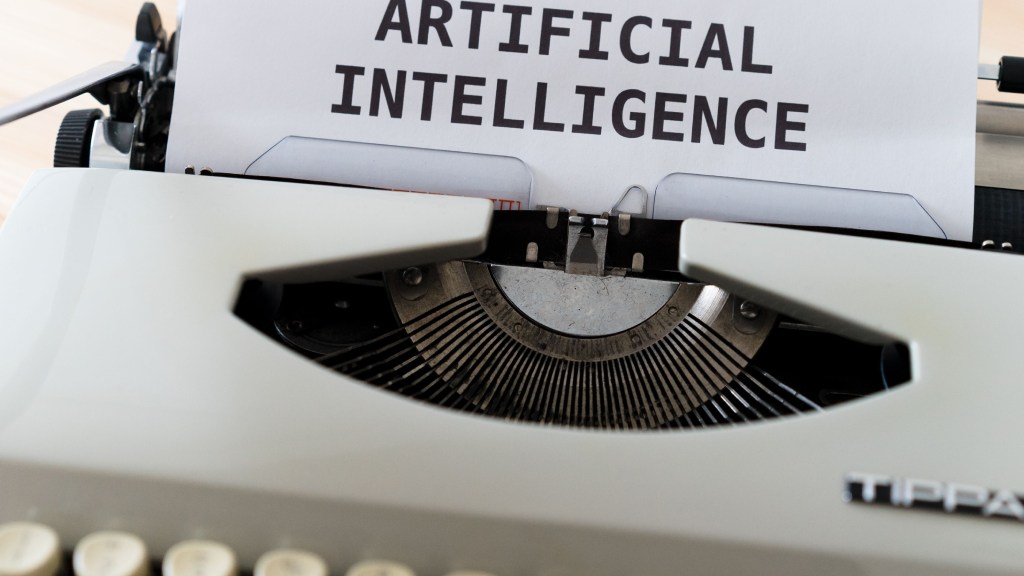
I know it’s tempting. You have a great idea for a book and AI is right there. Maybe you’ve written on your own a great book and need to revise before querying and AI is right there. Perhaps you’ve written a great book and need a cover before self-publishing and AI is right there. Or maybe you’ve written a great children’s book and in need of illustrations and AI is right there.
But before you ask AI to write for you, revise for you, or create illustrations for you—please pause and consider the following. And then ask yourself, “Is it worth it?”
- Generative AI Large Language Models work is not copyrightable.
- These models have been largely trained on copyrighted material. So anything they pump out is written/created on the backs of authors/illustrators who did the hard work and without their consent. This should be enough alone for authors and illustrators who pride themselves on being good literary citizens to say no.
- AI work is not your creative art.
- If you did not actually write it or illustrate it, you are not the author/illustrator. Again, the copyrighted material of other creatives is who wrote/illustrated this work.
- AI risks lukewarming the art of the human touch.
- Art is important. Both in words, visual arts, and song. I’m sure you’ve seen your FB flooded with AI invitations, posters, etc. They all look/feel the same. Don’t let AI remove your unique voice or artistic style.
- AI takes income from real authors, editors, illustrators, graphic designers, publishers, etc.
- When you use AI you are undermining the years of experience and the hard work of industry professionals. Please reconsider. Ensure any way you are using AI is not replacing industry professional such as editors or illustrators.
- AI work can prevent authors/illustrators from ever breaking out into the traditional publishing space.
- Most agents, editors, etc. will not consider work generated from AI. Additionally, if you’ve previously published AI work and then want to break into traditional publishing later, an agent/editor will ask.
In closing, I believe the most important question to ask yourself is this, “Do I value human art, including my own?” If the answer is yes, you know what to do.
AI may give the appearance of understanding our humanity, but the truth is, only a human being can speak to and understand another human being. Every time a prompt is entered into AI, the language that bot uses to respond was created in part through the synthesis of art that we, the undersigned, have spent our careers crafting. Taken without our consent, without payment, without even the courtesy of acknowledgment.
70 Authors Including Colleen Hoover, Emily Henry, Ali Hazelwood and more, June 27th, 2025


Leave a comment